7 Best Endoscope Cameras With Light for Walls (November 2026)
The best endoscope cameras with light for wall inspection include the Kinpthy Endoscope Camera with Light for most wall cavities, the Daxiongmao Endoscope Camera with Light for screen viewing without a phone, and the Acoath Two-Way Articulating Borescope for angled views around obstacles.
On this page (5 sections)
The best endoscope camera with light for walls is the Kinpthy Endoscope Camera with Light, because its 7.9mm probe slides through a drilled hole and its eight adjustable LEDs light the dark cavity behind drywall. Pick the Daxiongmao if you want a built-in screen and no phone, the Acoath if you need to steer around obstructions, or the DEPSTECH 2K for the sharpest detail.
A wall cavity is an awkward place to look. It's dark, tight, full of insulation and studs, and you can't widen the opening once you've drilled it.
An endoscope camera with light for walls fixes that: a thin lit probe goes through the hole, and you see the stud bay on a screen.
The trick is matching the probe to the job. Diameter decides whether the camera fits the hole you want to drill.
Cable length decides how far you can reach. Viewing method decides whether you hold a phone or a dedicated screen while standing on a ladder.
A few smaller choices follow from those three: whether the tip steers, whether the camera saves photos, and how many adapters come in the box for the phones in your household.
Our picks at a glance
-
1

-
2
 Best for screen viewing without a phone
Daxiongmao Endoscope Camera with Light
9.6/10 our score
See it on Amazon -
3
 Best for angled views around obstacles
Acoath Two-Way Articulating Borescope
9.6/10 our score
See it on Amazon
- 4
 Check it
MugEasy Endoscope Camera with Light
Best for two views on one screen - 5
 Check it
DEPSTECH 2K Endoscope Camera with Light
Best for fine detail in dark cavities - 6
 Check it
Ditomil Endoscope Camera with Light
Best for leak checks and drain lines - 7
 Check it
DEPSTECH 16.5 ft Dual-Lens Endoscope Camera
Best for long wall runs on a screen
The best endoscope cameras with light for walls
Kinpthy leads on probe size and resolution for the money, while the other picks trade phone tethering for a screen or add a steering tip. Each one suits a different kind of wall job.
Read the write-up for the one that matches how you'll work, then check the comparison table for the numbers side by side.
Kinpthy Endoscope Camera with Light: Best for most wall cavities
- 1920P HD resolution
- 7.9mm probe
- 16.4ft semi-rigid cable
- IP67 waterproof
A slim 7.9mm probe with 1920P resolution and a 16.4ft semi-rigid cable that threads through a drilled wall hole to show what's behind the plaster.
Pros
- Slim 7.9mm probe for drilled holes
- 1920P stills and video
- IP67 waterproof
Cons
- Needs a phone to view
- Light is adjustable only through the app
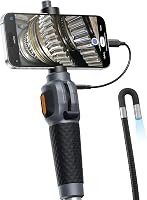
Kinpthy is the pick for most people because it gets the basics right. The 7.9mm probe fits a hole drilled with a common bit, and the 16.4ft semi-rigid cable pushes through insulation and holds its line around corners.
Semi-rigid means it bends where you push but keeps the shape you leave it in, so you can aim the tip and let go.
The 1920P resolution (1920x1440 stills and video) is sharp enough to spot a water stain on a stud, a wire staple or a mouse run. Eight adjustable LEDs let you dial down brightness when the tip sits close to drywall and the reflection blows out the picture.
A 16:9 aspect ratio fills a phone screen without black bars.
Connection is by USB to a phone through the included Android, Lightning and Type-C connectors. Download the SUP-ANESOK app and you get a live view plus photo and video capture.
Files save as JPEG and MP4. The IP67 waterproof probe also works in wet spots.
The fixed-focus lens reads best at close range, which suits wall cavities where the tip sits near a stud.
The trade-off is that you supply the screen. If your phone is your only camera, that's fine.
If you're on a ladder in a dusty room, the screen models are easier to handle.
Daxiongmao Endoscope Camera with Light: Best for screen viewing without a phone
- 4.3-inch color LCD screen
- 1080P resolution
- 16.5ft semi-rigid cable
- IP67 waterproof
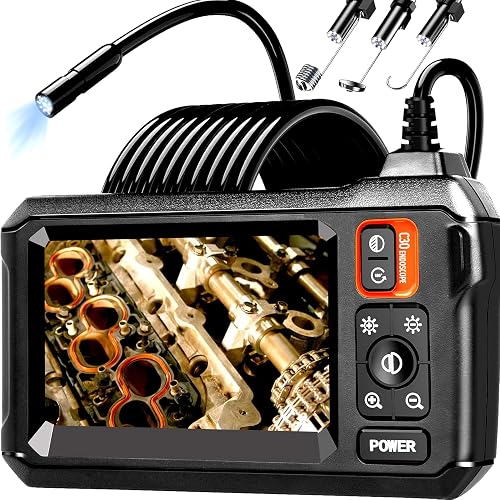
The built-in 4.3-inch screen means you can inspect a wall cavity without getting your phone dusty or fighting a Wi-Fi connection.
Pros
- Built-in screen, no phone needed
- 8 adjustable LEDs
- 16.5ft cable
Cons
- Cannot take photos or videos
- 8mm probe is a touch wider than the Kinpthy
Daxiongmao solves the phone problem by putting a 4.3-inch color LCD screen in the handle. Power it on and you're looking, with no app, no Wi-Fi and no risk of dust or drywall grit on your phone.
There's no pairing step and no driver to install, which matters when you're up a ladder and want to look now.
The 8mm probe is slightly wider than the Kinpthy's 7.9mm, but it still fits a standard drilled hole. Eight adjustable LEDs handle the dark, and the 16.5ft semi-rigid cable reaches deep into a wall run.
The probe uses a water-safe connector rated IP67, so it handles damp spots as well as dry cavities.
One limitation to know before you buy: this model cannot take pictures or videos, so you can look but not save what you find. For a quick check of a stud bay or a leak behind a baseboard, that's often all you need.
The 170° view angle covers a lot of cavity at once.
The battery runs about 3.5 hours and charges by Type-C at 5V/1A. The maker warns against fast chargers, so keep a basic household charger for it.
Pick it over the phone models when convenience matters more than saving evidence.
Acoath Two-Way Articulating Borescope: Best for angled views around obstacles
- Two-way 210° articulation
- Dual-lens front and side cameras
- 4.3-inch IPS screen
- 32GB card
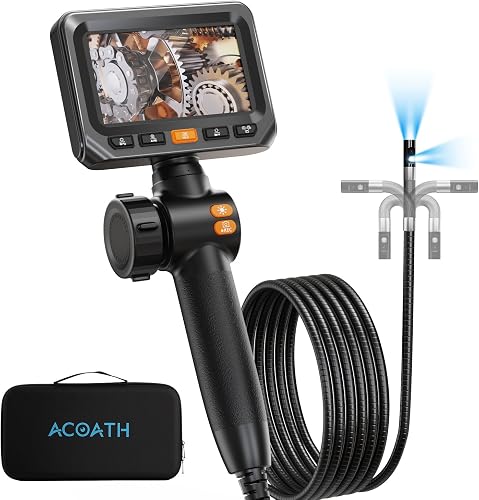
The articulating tip steers around studs, pipes and insulation, and the dual lens lets you switch to a side view without spinning the whole cable.
Pros
- Steers around obstructions in the wall
- Dual lens with instant switching
- Built-in 32GB card for photos and video
Cons
- 5ft cable is short for deep runs
- Higher price tier than the phone models
Acoath earns its place for the jobs where a straight probe fails. Its two-way 210° articulation steers the tip around a stud, a pipe or a roll of insulation without moving the whole cable.
The full range of motion is 420°, so you can sweep a cavity from one opening.
The dual lens adds a front camera and a side camera, so you can check the face of a stud and the space beside it in one pass. The 70° main lens and 60° side lens cover more of the bay than a single lens.
The 4.3-inch IPS screen shows both without an app or a phone.
Resolution runs at 1920x1080, and the built-in 32GB card stores photos and video you can review later. The 8 LEDs have four adjustable levels, which matters when the tip is close to a reflective surface.
The 8.4mm probe slips into tight spots.
The catch is the cable. It's 5ft, which suits shallow stud bays and outlet-level openings but won't reach from a top-floor hole down to a ceiling cavity.
The body is compact and light enough for long sessions. Choose Acoath for tricky angles and short runs.
MugEasy Endoscope Camera with Light: Best for two views on one screen
- Dual-lens split screen
- 4.3-inch IPS screen
- 16.5ft cable
- 8 adjustable LEDs
The split screen shows front and side views at once, so you can check both the near face of a stud and the space beside it in one pass.
Pros
- Front and side view on one screen
- Short 1.29in lens for narrow runs
- 16.5ft semi-rigid cable
Cons
- Cannot take or store photos
- Screen adds bulk to the handle
MugEasy's feature is the split screen, which shows the front and side camera views at once on a 4.3-inch IPS screen. That's useful when you want to see the near face of a stud and the space beside it without switching modes.
The screen has a horizontal view angle of about 170°, and you cycle three observation modes with one button.
The lens is short at 1.29in, about half the length of a conventional probe tip. That makes it easier to work at difficult angles in a narrow cavity.
The 7.9mm probe and 16.5ft semi-rigid cable reach deep into long wall runs.
Eight adjustable LEDs and the IP67 rating cover dark, damp spots. Focusing distance runs from 2cm to 10cm, so the camera reads best when it's fairly close to the surface you're checking.
The handle is light and shaped to sit comfortably in the hand for a long session.
Like the Daxiongmao, this model cannot take or store photos, so plan on noting what you see. Pick it for the dual view and the short lens, not for record-keeping.
DEPSTECH 2K Endoscope Camera with Light: Best for fine detail in dark cavities
- 2K 2560x1440P resolution
- Dual 7.9mm lenses
- 16.5ft semi-rigid cable
- IP67 waterproof
The highest resolution here suits buyers who need to read fine detail like hairline cracks or wiring labels inside a wall.
Pros
- 2K resolution for fine detail
- Dual lenses for 360° coverage
- 16.5ft cable with app controls
Cons
- Needs a phone and the app
- Android devices must support OTG
DEPSTECH's 2K model is the resolution leader here. The 2560x1440P lens is 80% sharper than standard 1080P, according to the maker, and shows fine cracks, wiring labels and insulation tears more clearly.
The 3.69MP sensor and Bluart 3.0 processing keep detail clean.
The dual 7.9mm lenses give front and side views you switch in the app, covering 360° of a cavity. The 80° lens gives a wider view than most here.
The 16.5ft semi-rigid cable reaches deep into a wall, and the IP67 probe handles damp spots. Nine adjustable LEDs (eight plus one) light the dark.
It connects by Type-C or Lightning to a phone running iOS 11.0+ or Android 9.0+. The DEPSTECHCAM app adds 2x digital zoom and 90° image rotation, which help when the cable twists.
Files save as JPEG. The hook, magnet and threaded cap let you retrieve small items from a bay.
Remove the cap before fitting the hook or magnet.
Two things to plan for: Android phones need OTG support enabled, and the app is the only way to view. If your phone lacks OTG, this isn't the one.
For detail work in a dark cavity, nothing here beats it.
Ditomil Endoscope Camera with Light: Best for leak checks and drain lines
- 1920P HD resolution
- 7.9mm probe
- 16.4ft semi-rigid cable
- 8 adjustable LEDs
A slim waterproof probe with eight LEDs and phone adapters for iOS and Android, priced for buyers who inspect walls and pipes on the same jobs.
Pros
- Three phone adapters included
- IP67 waterproof probe
- 1920P stills and video
Cons
- Needs a phone to view
- Single lens only
Ditomil covers both wall and drain jobs in one tool. The 7.9mm probe and 16.4ft cable match the Kinpthy closely, and the 1920x1440 resolution shows the same level of detail.
A 2.77MP sensor and fixed-focus lens keep the view steady as you push.
What sets it apart is the adapter kit: Type-C, Micro-USB and Lightning connectors all in the box. That matters in a household with mixed phones.
The IP67 waterproof probe also works in a wet drain line when you move from wall to plumbing. The maker bills it as a leak detection tool for drains, ducts and cavities.
Eight adjustable LEDs light the cavity, and the app gives a live view with photo and video capture in JPEG and MP4. The semi-rigid cable holds its shape around corners.
The kit adds a mirror, hook, magnet and protective cap.
The single lens means no side view and no steering tip. Pick Ditomil if you want one tool for walls and pipes and you value the three-adapter kit.
For angled views, choose the Acoath instead.
DEPSTECH 16.5 ft Dual-Lens Endoscope Camera: Best for long wall runs on a screen
- 4.3-inch IPS split screen
- 1080P video
- 16.5ft semi-rigid cable
- 180° rotating camera
A screen unit with dual lenses and a 180° rotating camera that reaches deep into long wall cavities without tying up your phone.
Pros
- Long 16.5ft reach
- Built-in screen and battery
- Dual lens with front and side views
Cons
- No memory card in the box
- Lower score than the other screen models
The DEPSTECH DS300 is the long-reach screen option. Its 16.5ft semi-rigid cable and 4.3-inch IPS screen suit whole-wall runs without tying up your phone.
The screen has a wide view angle of about 170°, so you see the bay clearly from a comfortable hold.
The dual lens switches between front and side views with one button, and the camera rotates 180° for a better angle. 1080P video and 2.0MP photos are clear enough for wall work.
Seven adjustable LEDs with Bluart 2.0 tech handle the dark, and the maker's second-generation CMOS chip keeps the live feed smooth with less delay when you switch views.
The built-in battery runs about 4 hours and recharges by USB. That's enough for a full day of spot checks.
Focal ranges are 3cm to 8cm for the front camera and 2cm to 6cm for the side camera.
The score is lower than the others for two reasons. There's no memory card in the box, so you supply your own for photos.
And at 1080P it gives up some detail to the 2K DEPSTECH and the 1920P models. It's still a solid long-reach screen pick.
How these endoscope cameras for wall inspection compare
The main split is viewing method. Phone models (Kinpthy, DEPSTECH 2K, Ditomil) are lighter and cheaper but tie up your phone.
Screen models (Daxiongmao, MugEasy, Acoath, DEPSTECH DS300) cost more but free your hands.
Probe size is nearly identical across the group: 7.9mm or 8mm. Cable length splits at 5ft for the Acoath and 16.4ft to 16.5ft for everything else.
Resolution runs from 1080P up to 2K. Waterproofing is IP67 on every pick.
Photo and video capture also splits the group. The Kinpthy, DEPSTECH 2K and Ditomil all save stills and video.
The Acoath stores to its own card. The Daxiongmao and MugEasy are view-only.
That single difference decides the buy for anyone who needs to document a leak or damage for a landlord or an insurance claim.
| Product | Best for | Probe diameter | Cable length | Connection | Our score |
|---|---|---|---|---|---|
| Kinpthy Endoscope Camera with Light | most wall cavities | 7.9mm | 16.4ft | USB to phone | 9.7 |
| Daxiongmao Endoscope Camera with Light | screen viewing without a phone | 8mm | 16.5ft | 9.6 | |
| Acoath Two-Way Articulating Borescope | angled views around obstacles | 5ft | 9.6 | ||
| MugEasy Endoscope Camera with Light | two views on one screen | 7.9mm | 16.5ft | 9.5 | |
| DEPSTECH 2K Endoscope Camera with Light | fine detail in dark cavities | 7.9mm | 16.5ft | 9.3 | |
| Ditomil Endoscope Camera with Light | leak checks and drain lines | 7.9mm | 16.4ft | 9.2 | |
| DEPSTECH 16.5 ft Dual-Lens Endoscope Camera | long wall runs on a screen | 16.5ft | 7.9 |
How we compared these wall inspection endoscopes
We compared these models on the specs that decide a wall job: probe diameter against a drilled hole, cable length against the depth of a stud bay, resolution against the size of the detail you need to see, and viewing method against how you'll stand while working. We also weighed the light setup (how many LEDs and whether brightness adjusts) and the waterproof rating for buyers who inspect drains too.
Scores weigh those specs against what a wall inspector actually needs. A long cable and a steering tip count for more than a fancy case.
We read each maker's stated focal range as well, because a fixed-focus lens that only reads at close range changes how you position the tip in a bay.
What matters most when you buy an endoscope camera for walls?
The features that matter most are probe diameter, cable length and viewing method, in that order. Everything else is a bonus.
The order holds because a probe that won't fit the hole never gets used, a cable that won't reach leaves the far end of the bay unseen, and the wrong viewing method makes the whole job clumsy.
How thin does the probe need to be?
A 7.9mm to 8mm probe fits a hole drilled with a standard bit. Thinner probes exist, but every model here lands in the same slim range.
Drill a hole just larger than the probe so the cable slides without binding. Patch it afterward with spackle and touch-up paint.
The Acoath's probe is 8.4mm and not the slimmest here, but the steered tip matters more in tight bays.
How long a cable do you need for a wall run?
Measure the run first. A short outlet-level opening needs only a couple of feet, so a 5ft cable like the Acoath's is enough.
A top-floor hole that needs to reach a ceiling cavity can take 12ft or more, which is where the 16.4ft to 16.5ft models earn their keep. Longer than you need is fine; shorter is not.
If you plan to inspect a whole wall from one hole, go long.
Should you pick a screen model or a phone model?
Pick a screen model when you'll be on a ladder or in a dusty room. The Daxiongmao and MugEasy handle the job without your phone, though neither saves photos.
Pick a phone model when you want to capture evidence of a leak or damage. The Kinpthy and DEPSTECH 2K both save stills and video.
If you need both hands free and a record of what you saw, no single model here gives you both, so pick the priority.
Do you need a steering tip for wall inspection?
Only if you expect obstructions. A straight semi-rigid cable works for open stud bays.
A steering tip like the Acoath's two-way articulation helps when a pipe or a diagonal brace blocks the path. For most walls, a straight probe is enough and saves money.
The dual-lens models cover some of the same ground by letting you look sideways without steering.
Is the adjustable light worth having?
Yes. Fixed LEDs can wash out the picture when the tip sits close to drywall.
Adjustable levels let you dim the light so the surface detail shows. Every model here has adjustable LEDs, but the number ranges from seven to nine.
More LEDs help in wide cavities; fewer are easier to manage in tight spots. The DEPSTECH 2K's nine LEDs give the most reach into a deep, unlit bay.
What else should you check before buying?
Check the connection kit. Phone models need the right adapter for your phone: Type-C, Lightning or Micro-USB.
Ditomil includes all three. DEPSTECH requires OTG support on Android.
Screen models skip that step. Also weigh whether you need photo and video capture, since the Daxiongmao and MugEasy can't save images.
Finally, check the focal range against how close you can get the tip, and the battery life on screen models if you plan long sessions.
Which endoscope camera with light for walls should you buy?
Buy the Kinpthy Endoscope Camera with Light for most wall inspections. Its 7.9mm probe, 16.4ft cable and 1920P resolution cover stud bays, insulation and wiring without paying for a screen you don't need.
Pick the Daxiongmao for screen viewing without a phone, the Acoath for steered views around obstructions, the MugEasy for two views at once, the DEPSTECH 2K for the sharpest detail, the Ditomil for a three-adapter kit, or the DEPSTECH DS300 for long runs on a screen. For a bigger picture of what's behind the plaster, our guide to the best inspection camera for a crawl space covers the wider spaces.
If you're also clearing a blocked line, see the best sewer camera with locator. And if you're still deciding how to view the feed, read Wi-Fi borescope vs inspection camera.
For a deeper look at probe design, our roundup of endoscope borescope cameras with light is the next read.
Our top 3 picks at a glance
-
1
-
2
Best for screen viewing without a phone
Daxiongmao Endoscope Camera with Light
9.6/10 our score
See it on Amazon -
3
Best for angled views around obstacles
Acoath Two-Way Articulating Borescope
9.6/10 our score
See it on Amazon
Frequently asked questions
Can an endoscope camera see inside a wall?
Yes. Drill a small hole through the drywall into the cavity and feed the probe through it.
A light on the camera tip makes the dark space between studs visible on your screen or phone.
What probe size fits a wall inspection hole?
A 7.9mm to 8mm probe fits a hole drilled with a standard bit. Patch the hole afterward with spackle.
Keep the drill bit just larger than the probe so the cable slides freely.
Do I need Wi-Fi to use an endoscope camera for walls?
No. Most models here connect by USB cable to your phone or use a built-in screen.
Only a Wi-Fi borescope needs a wireless link, and that link is the part most likely to drop inside a wall.
How long should the cable be for wall inspection?
A 5ft cable handles shallow stud bays and short runs. A 16.4ft or 16.5ft cable reaches down from a top-floor outlet to a ceiling cavity in one pass.
Pick longer when you plan to inspect whole walls.
Is the light on an endoscope camera bright enough for wall cavities?
Yes. Eight adjustable LEDs light a stud bay or insulated cavity well.
The adjustable levels matter when the camera sits close to a surface and the reflection washes out the view.
Can I use the same endoscope camera for drains and walls?
Yes. An IP67 waterproof probe works in wet drain lines and dry wall cavities.
Rinse and dry the probe before moving from a drain to a wall so you don't carry debris into the cavity.