9 Best Air Duct Inspection Cameras With Monitor (November 2026)
The best air duct inspection cameras with monitors include the Teslong 5'' Dual Lens Borescope Camera for most duct inspections, the TGJOR Endoscope Camera with Light for wide-angle viewing, and the Acoath Two-Way Articulating Borescope for controlled turns.
On this page (11 sections)
- Best air duct inspection cameras with monitor
- How we compared these monitor-equipped duct cameras
- Which air duct inspection camera with monitor is best overall?
- Do you need a dual-lens camera for duct inspection?
- How much cable do you need for an HVAC inspection?
- Is articulation worth paying attention to?
- Should you choose a screen or a phone?
- What screen size is useful for HVAC work?
- What other features matter in an air duct camera?
- Product details and trade-offs
- The final choice for an air duct inspection camera with monitor
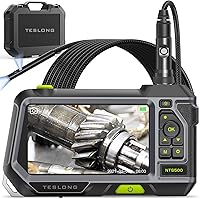
The Teslong 5'' Dual Lens Borescope Camera is the best air duct inspection camera with monitor for most people because it combines a 5 in IPS screen, forward and side cameras, a 16.5 ft semi-rigid cable and a 4.5-hour battery.
Choose Acoath or DXZtoz when steering the camera head around bends is the main problem. Pick DEPSTECH's 50 ft model for deep duct runs, or ANYSUN when a larger screen and longer working time matter more than a compact handheld design.
An air duct camera needs to do 3 jobs well: show a useful view, reach the inspection area and give you enough control to position the probe. The best choice depends on duct length, access opening, bends, lighting and whether you need to record evidence.
Our picks at a glance
-
1
 Best for most duct inspections
Teslong 5'' Dual Lens Borescope Camera
9.7/10 our score
See it on Amazon -
2
-
3
- 4
 Check it
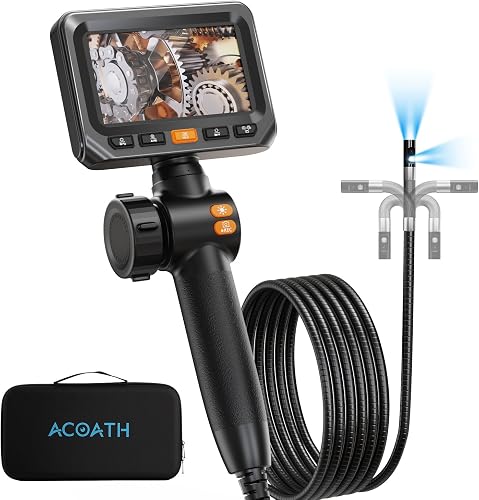
DXZtoz Two-Way Articulating Borescope with Light
Best for longer articulated reach - 5
 Check it
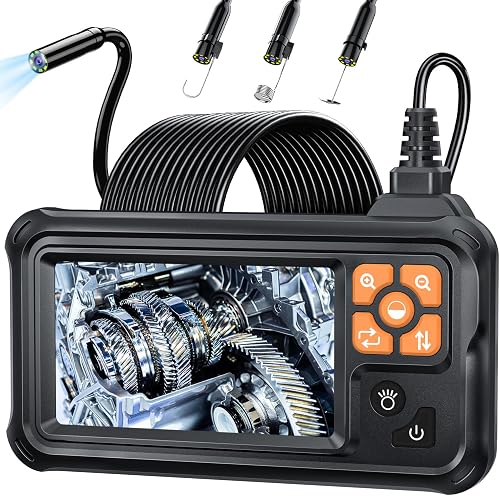
SKYBASIC Industrial Endoscope Borescope Camera with Light
Best for simple live viewing - 6
 Best for long pipe runsCheck it
- 7
 Best for phone-based snapshotsCheck it
- 8
 Check it
DEPSTECH 50 ft Triple-Lens Inspection Camera
Best for deep duct runs - 9
 Check it
DEPSTECH 16.5 ft Dual-Lens Endoscope Camera
Best for balanced recording
Best air duct inspection cameras with monitor
The Teslong is the strongest all-purpose pick, while the other products target wide viewing, articulation, long reach, recording or phone-free simplicity. The scores weigh the stated specs and features against the needs of duct inspection.
How we compared these monitor-equipped duct cameras
We compared screen size, camera views, cable length, probe control, lighting, waterproofing, recording and battery details. A camera with a large display is easier to share, but screen size does not replace a cable that can reach the inspection area.
Dual-lens products receive extra attention because duct walls and corners are not always visible from a forward-facing camera. Articulating models stand out when the camera must turn around a bend, while long semi-rigid cables suit larger layouts.
The products are ranked for the searcher's likely job, not for one universal type of inspection. A 5 ft articulated borescope can be more useful in a tight mechanical cavity than a 50 ft system, while the opposite is true for a distant duct run.
| Product | Best for | Screen | Cable | Camera views | Our score |
|---|---|---|---|---|---|
| Teslong 5'' Dual Lens Borescope Camera | most duct inspections | 5 in IPS | 16.5 ft semi-rigid | Forward and side | 9.7 |
| TGJOR Endoscope Camera with Light | wide-angle viewing | 5 in HD | 16.4 ft semi-rigid | 9.6 | |
| Acoath Two-Way Articulating Borescope | controlled turns | 4.3 in IPS | 9.6 | ||
| DXZtoz Two-Way Articulating Borescope with Light | longer articulated reach | 5.5 ft | 9.5 | ||
| SKYBASIC Industrial Endoscope Borescope Camera with Light | simple live viewing | 4.3 in LCD | 16.5 ft semi-rigid | 9.0 | |
| ANYSUN Sewer Camera | long pipe runs | 7 in LCD | 8.8 | ||
| PAPIBLU Endoscope with Light | phone-based snapshots | 16.4 ft semi-rigid | 8.7 | ||
| DEPSTECH 50 ft Triple-Lens Inspection Camera | deep duct runs | 5 in IPS | 50 ft semi-rigid | 8.0 | |
| DEPSTECH 16.5 ft Dual-Lens Endoscope Camera | balanced recording | 4.3 in IPS | 16.5 ft semi-rigid | 7.9 |
Which air duct inspection camera with monitor is best overall?
The Teslong is the best overall choice because it balances reach, screen size, camera coverage and battery life. Its 5 in IPS display is larger than the 4.3 in screens on Acoath, DXZtoz, SKYBASIC and the 16.5 ft DEPSTECH.
The forward and side cameras let you change the viewing direction at the base of the cable. Independent LEDs on each camera help illuminate the target, and the 16.5 ft semi-rigid cable gives enough reach for many home and workshop inspections.
The built-in 5000mAh battery provides about 4.5 hours of continuous use. The cable holds its shape while you feed it into a duct, yet it can coil for storage.
Teslong also includes a hard carrying case with a hook, magnet and mirror. Those accessories help with retrieval and close inspection, but the model does not steer the camera head remotely.
Do you need a dual-lens camera for duct inspection?
A dual-lens camera is the better choice when you need to inspect both the duct path and the surrounding wall. The forward view helps you move toward the target, while the side view exposes surfaces beside the cable.
Pick dual lenses for walls and corners
Teslong, TGJOR, Acoath, DXZtoz, PAPIBLU and both DEPSTECH cameras include dual-lens features or dual-lens configurations. The side camera is helpful when the probe cannot turn enough to face a suspected area.
TGJOR adds a 170-degree viewing angle and 8 adjustable LEDs. It is a good fit for live viewing, but it cannot take pictures or videos.
DEPSTECH's 50 ft model goes further with 3 lenses, split-screen viewing and a 180-degree flip button. That design suits a long duct where you want to compare front and side views without pulling the cable back.
Pick a forward camera for simple checks
SKYBASIC keeps the task simple with one handheld screen, 8 adjustable LEDs and a 2–10cm focus range. It suits quick live inspections where recording and side views are less important.
How much cable do you need for an HVAC inspection?
A 16.4 or 16.5 ft cable is the practical middle ground for many duct, wall and plumbing inspections. A 5 or 5.5 ft probe is easier to manage in a short cavity, while a 50 ft cable is built for a much longer route.
Choose 5 to 5.5 ft for tight access
Acoath has a 5 ft semi-rigid cable, and DXZtoz has a 5.5 ft probe. Both use articulation to help position the camera around nearby bends.
These shorter systems are easier to keep under control when the inspection is close to the access point. They also reduce the amount of cable to coil after the job.
Choose 16.4 to 16.5 ft for general duct work
Teslong, TGJOR, SKYBASIC, PAPIBLU and DEPSTECH's dual-lens camera all provide about 16.4 or 16.5 ft of reach. This length suits many home HVAC checks, wall cavities and short pipe runs.
For a different confined-space use, compare an inspection camera for crawl space with the duct-focused options here. Crawl spaces often favor longer reach and a screen that remains readable while you work at floor level.
Choose 50 ft for deep runs
DEPSTECH's 50 ft model is the clear reach choice. Its semi-rigid cable can travel farther through a duct or drain, and the triple-lens system helps inspect the path without repeatedly twisting the cable.
The trade-off is storage and handling. A long cable needs room to coil, and the 1.82kg system is heavier than the smaller handheld models.
Is articulation worth paying attention to?
Articulation is worth prioritizing when the camera must turn around a bend or point toward a side wall. Acoath articulates 210 degrees, while DXZtoz articulates 220 degrees.
Acoath for short, precise turns
Acoath pairs 210-degree articulation with a dual-lens camera and a 4.3 in IPS screen. Its 5 ft cable keeps the system focused on short inspections, and the 32GB TF card supports captured photos and videos.
Choose it for HVAC access points where the target is close but hidden behind a turn. Its shorter reach is the main trade-off against the 16.5 ft models.
DXZtoz for extra steering and zoom
DXZtoz adds 220-degree steering, an 8x digital zoom and a 5.5 ft probe. Its 4.3 in HD IPS monitor shows 1080P video, and the 8.5mm camera uses 8 LEDs with adjustable brightness.
The unit has a 3000mAh battery with about 4 hours of working time. It weighs 1.41kg, so it is more substantial than a basic phone-connected scope.
Should you choose a screen or a phone?
Choose a built-in screen when you want immediate operation, shared viewing and fewer connection steps. Choose a phone-connected camera when saved phone files and device compatibility matter more than a self-contained display.
Screen-based cameras for fast setup
Teslong, TGJOR, Acoath, DXZtoz, SKYBASIC, ANYSUN and both DEPSTECH models use dedicated screens. They keep the camera controls and live image together, which is useful when you are feeding a semi-rigid cable with both hands.
TGJOR is especially simple because it needs no app or Wi-Fi. Its main trade-off is that it cannot take pictures or videos.
Phone viewing for easy file sharing
PAPIBLU connects to Type-C, Micro USB and Lightning devices. Its 1920×1440 image, 16.4 ft semi-rigid cable and dual-lens wiring harness suit someone who wants to view and save inspection footage on a compatible phone.
This approach adds a phone and app to the setup. If you are deciding between the two formats, read our wifi borescope vs inspection camera comparison for the workflow differences.
What screen size is useful for HVAC work?
A 5 in screen gives the most comfortable handheld view in this group, while a 4.3 in display keeps the camera smaller. ANYSUN's 7 in LCD is easiest to share, but its system is much heavier.
5 in screens for detail and portability
Teslong and TGJOR use 5 in screens, while DEPSTECH's 50 ft model uses a 5 in IPS screen. These displays give more room to inspect live video without moving as close to the screen.
Teslong has an IPS display, and DEPSTECH adds split-screen viewing for its triple-lens system. TGJOR uses a 5 in HD screen with a 170-degree view.
4.3 in screens for smaller handheld systems
Acoath, DXZtoz, SKYBASIC and the 16.5 ft DEPSTECH use 4.3 in displays. These cameras are easier to carry through a tight work area, especially when a shorter cable or simple control layout is more useful than a large screen.
7 in screens for long pipe systems
ANYSUN is different from the compact borescopes. It has a 7 in LCD, a 4500mAh battery and up to about 9 hours of continuous working time.
The camera housing measures 23mm and suits pipes from 1 to 8 in. Its IP68 waterproof camera, 12 adjustable LEDs, DVR recording and external monitor connection make it a better choice for pipe and drain work than for a small indoor duct access opening.
What other features matter in an air duct camera?
Lighting, waterproofing, recording and cable stiffness affect daily use more than a high resolution number alone. Match each feature to the inspection conditions you expect.
Lighting for dark duct interiors
Teslong uses 7 LEDs, TGJOR and SKYBASIC use 8 adjustable LEDs, and DEPSTECH's 50 ft model uses 10 LEDs. Adjustable brightness helps you manage dark interiors and reflective surfaces.
Acoath has 8 LEDs with 4 brightness levels. DXZtoz also has 8 high-intensity LEDs with 4 adjustable brightness settings.
Waterproofing for damp areas
Teslong, TGJOR, Acoath, DXZtoz and DEPSTECH's 16.5 ft model use IP67 waterproof probes or cameras. ANYSUN goes to IP68 and has a stainless steel camera housing.
Waterproofing helps when a duct or pipe contains moisture, but it does not turn every handheld camera into a full sewer inspection system. Match the camera housing and cable to the environment.
For broader plumbing use, compare these picks with the best inspection cameras for plumbing. Plumbing work often needs stronger waterproofing and longer cable control than a dry HVAC check.
Recording for maintenance records
Acoath, DXZtoz, PAPIBLU, DEPSTECH's 50 ft model and DEPSTECH's 16.5 ft model support captured images or video. ANYSUN includes DVR recording and an 8GB SD card.
Teslong supports AVI and JPEG files with separate storage needed for video output. TGJOR and SKYBASIC are live-view cameras that cannot take pictures or videos.
Product details and trade-offs
The best product depends on the exact inspection pattern, so each pick earns its place for a different reason. These short reviews explain how the features translate into daily use.
Teslong 5'' Dual Lens Borescope Camera: Best for most duct inspections
- Forward and side cameras
- 5 in IPS display
- 16.5 ft semi-rigid cable
- 4.5-hour battery
The Teslong combines a self-contained screen, dual camera views and a 16.5 ft cable for common HVAC, wall and plumbing inspections.
Pros
- Dual lenses with separate LEDs
- Long semi-rigid cable
- Built-in 5000mAh battery
Cons
- No articulated steering
- The cable is longer than needed for very short inspections
Teslong is the best pick for most air duct inspections because it combines the features that matter most in one handheld system. The 5 in IPS display gives you a clear working view, while the forward and side cameras show both the route ahead and nearby duct surfaces.
Its 16.5 ft semi-rigid cable is long enough for many HVAC, wall and plumbing checks. The 8mm cable holds its shape while you feed it through an access point, then coils for storage.
The built-in 5000mAh battery provides about 4.5 hours of continuous use. Seven LEDs, including 6 front lights and 1 side light, give each camera its own illumination, with brightness control for dark or reflective spaces.
Teslong includes a hard carrying case, hook, magnet and mirror. It does not have articulated steering, so Acoath or DXZtoz is a better choice when turning the camera head is the main task.
Choose Teslong for a balanced screen, cable and camera setup.
TGJOR Endoscope Camera with Light: Best for wide-angle viewing
- 5 in HD screen
- 170-degree view
- Dual-lens camera
- 16.4 ft semi-rigid cable
TGJOR offers a wide 170-degree view and dual lenses in a phone-free handheld system for quick duct and pipe checks.
Pros
- Wide viewing angle
- 8 adjustable LEDs
- 3–4-hour battery
Cons
- Cannot take pictures or videos
- No articulated probe
TGJOR suits live inspections where a wide view and simple controls matter more than recording. Its 170-degree viewing angle shows more of the duct scene at once, and the dual-lens design lets you switch between forward and side views.
The 5 in HD screen is easy to use without a phone, app or Wi-Fi. Its 16.4 ft semi-rigid cable bends and holds its shape, so you can guide it through a duct or pipe while watching the screen.
Eight adjustable LEDs help light dark spaces, and the IP67 waterproof camera fits damp inspection work. The 1.2–4 in focus range is aimed at close details, which is useful when checking a nearby duct wall or obstruction.
The key trade-off is recording. TGJOR cannot take pictures or videos, so it is best for live diagnosis rather than maintenance documentation.
Teslong offers a broader feature balance, while DEPSTECH suits buyers who need saved files.
Choose TGJOR for wide, phone-free live viewing.
Acoath Two-Way Articulating Borescope: Best for controlled turns
- 210-degree articulation
- Dual lenses
- 4.3 in IPS screen
- 5 ft semi-rigid cable
Acoath is suited to short, complex inspections where steering the camera head matters more than reaching deep into a duct.
Pros
- Two-way articulation
- Front and side cameras
- Photos and videos
Cons
- 5 ft cable limits reach
- Smaller screen than the 5 in models
Acoath is the best fit when a short inspection requires controlled turns. Its 210-degree articulation lets you point the probe around bends, and the 420-degree range of motion gives you more positioning control than a fixed cable.
The dual-lens camera switches between front and side views with one button. Its 4.3 in IPS screen displays 1920x1080 video, while 8 adjustable LEDs provide 4 brightness levels for dark spaces.
The 5 ft semi-rigid cable and 0.33 in probe favor close access points rather than distant duct runs. That short reach is a real advantage in compact work areas because there is less cable to manage.
Acoath also captures photos and videos to the built-in 32GB TF card. The protective case, hook, magnet, mirror and cap add useful support for inspection and retrieval tasks.
Choose Acoath for articulated control near the access point.
DXZtoz Two-Way Articulating Borescope with Light: Best for longer articulated reach
- 220-degree articulation
- 5.5 ft probe
- 4.3 in HD IPS monitor
- 8x digital zoom
DXZtoz adds articulated control, zoom and a slightly longer probe for HVAC or engine spaces that require close positioning.
Pros
- 220-degree steering
- 8x digital zoom
- 4-hour working time
Cons
- Shorter reach than 16.5 ft models
- Heavier than several handheld picks
DXZtoz offers the strongest combination of articulation and close-up control in this group. Its 220-degree steering lens helps the camera turn around obstacles, while the 8x digital zoom enlarges small details on the 4.3 in HD IPS monitor.
The 8.5mm probe has a 1–15cm focal range and 8 high-intensity LEDs with 4 brightness settings. Its 5.5 ft metal gooseneck is malleable and holds its shape as you position it.
A 3000mAh battery provides about 4 hours of working time. The camera records MP4 files to a 32GB memory card and includes a hook, magnet, side mirror and carrying case.
Compared with Acoath, DXZtoz offers slightly more articulation, a longer probe and stronger zoom. Compared with Teslong, it reaches less distance and uses a smaller screen, but it gives you better control around close bends.
Choose DXZtoz for short inspections that need steering and zoom.
SKYBASIC Industrial Endoscope Borescope Camera with Light: Best for simple live viewing
- 4.3 in LCD display
- 16.5 ft semi-rigid cable
- 8 adjustable LEDs
- 2–10cm focus range
SKYBASIC keeps operation simple with a dedicated screen, long cable and adjustable lights for live duct and wall inspections.
Pros
- No phone or app needed
- Long cable
- Hook, magnet and side mirror
Cons
- No photos or videos
- Smaller display than the 5 in picks
SKYBASIC is the simple live-view choice for buyers who want a dedicated monitor and a long cable without a phone. Its 4.3 in LCD screen starts with a long press of the power button, and the 16.5 ft semi-rigid cable suits many HVAC and wall inspections.
Eight adjustable LEDs illuminate dark areas, while the 2–10cm focus range supports close inspection. The cable is both stiff and flexible, so it can hold a position while you work through an access opening.
The package includes a hook, magnet and side mirror. Those tools help with nearby retrieval and side viewing, even though the camera itself does not use a dual-lens system.
SKYBASIC cannot take pictures or videos. Choose it for quick diagnosis and live viewing, or move up to the DEPSTECH 16.5 ft model if documentation matters.
Teslong offers a larger screen and dual cameras at the top of this list.
Choose SKYBASIC for straightforward live HVAC checks.
ANYSUN Sewer Camera: Best for long pipe runs
- 7 in LCD screen
- Long working time
- IP68 waterproof camera
- DVR recording
ANYSUN is the specialist choice for longer pipe and duct runs where a large screen, recording and a waterproof camera housing matter.
Pros
- 7 in screen
- About 9-hour working time
- DVR and 8GB SD card
Cons
- Heavy 5.5kg system
- 23mm camera housing is larger than handheld probes
ANYSUN is the specialist pick for long pipe and duct work. Its 7 in LCD screen is the largest here, and the system provides up to about 9 hours of continuous working time from its 4500mAh battery.
The IP68 camera housing measures 23mm and suits pipes from 1 to 8 in. Twelve adjustable LEDs, a 140-degree viewing angle and a center locator help with underground or enclosed inspections.
ANYSUN records through its DVR function and includes an 8GB SD card. It can also connect to an external monitor, which is useful when more than one person needs to view the inspection.
The trade-off is size. At 5.5kg, this is not a compact handheld borescope, and its 23mm camera housing needs a larger opening than the slim probes above.
Choose ANYSUN when reach, recording and screen size matter more than portability.
PAPIBLU Endoscope with Light: Best for phone-based snapshots
- 1920P image
- 16.4 ft semi-rigid cable
- Dual-lens wiring harness
- Phone connectors
PAPIBLU fits buyers who want a long probe and phone viewing, with connectors for Type-C, Micro USB and Lightning devices.
Pros
- High stated image resolution
- Long cable
- Multiple phone connectors
Cons
- Requires a phone and app
- No self-contained monitor
PAPIBLU is the right choice for someone who wants phone viewing and saved files instead of a built-in monitor. Its 1920×1440 image and 16.4 ft semi-rigid cable suit HVAC, wiring, pipe corners and engine compartments.
The dual-lens wiring harness helps with multi-angle observation. The semi-rigid cable bends through curves while maintaining enough shape to guide the camera, and the IP67 waterproof design supports damp inspection areas.
PAPIBLU includes Type-C, Micro USB and Lightning connectors. That gives it wider phone compatibility than a single-connector scope, but the phone and app become part of the inspection setup.
The 0.2kg camera is much lighter than the screen-based systems. It is also less self-contained because there is no dedicated display.
Choose Teslong or TGJOR for immediate screen viewing, or choose PAPIBLU when phone-based capture is central to the job.
Choose PAPIBLU for phone-connected inspection files.
DEPSTECH 50 ft Triple-Lens Inspection Camera: Best for deep duct runs
- 50 ft semi-rigid cable
- Triple-lens viewing
- 5 in IPS screen
- Split-screen modes
DEPSTECH is the reach specialist, pairing a 50 ft cable with triple lenses and split-screen viewing for long HVAC or drain paths.
Pros
- Longest cable here
- Triple-lens coverage
- 32GB card included
Cons
- Heavier 1.82kg handheld system
- Long cable needs more storage space
DEPSTECH's 50 ft model is the best choice when a camera must travel deep into a duct or pipe. The 50 ft semi-rigid cable gives it far more reach than the 16.4–16.5 ft models, while the 5 in IPS screen keeps the live view practical.
Its triple-lens system includes a front camera and 2 side cameras. Split-screen viewing, a 180-degree flip button and 5 viewing modes help you examine different surfaces without twisting the full cable.
The cameras cover different focal ranges from 0.6–0.9 in to 1.2–3.9 in. That range supports close inspection at several distances, and the IP67 rating suits wet conditions.
The 1.82kg system is heavier than the smaller handheld models, and a 50 ft cable needs more storage space. Choose it when the distance is real, not simply because a longer cable sounds useful.
Choose DEPSTECH for deep duct runs and multi-angle viewing.
DEPSTECH 16.5 ft Dual-Lens Endoscope Camera: Best for balanced recording
- 16.5 ft semi-rigid cable
- Dual-lens viewing
- 4.3 in IPS screen
- Photo and video recording
This DEPSTECH gives you dual views, recording and a medium-length cable for routine HVAC, plumbing and wall inspections.
Pros
- Front and side cameras
- Photo and video capture
- 180-degree camera rotation
Cons
- No TF card included
- Smaller screen than the 5 in options
The 16.5 ft DEPSTECH is the balanced recording choice for routine HVAC, plumbing and wall inspections. Its dual-lens camera switches between front and side views, while the 4.3 in IPS screen displays 1080P photos and video.
The 16.5 ft semi-rigid cable holds its shape as you work through narrow spaces. A 180-degree rotating camera orientation adds more control, and the front and side cameras use different focal ranges for close inspection.
Seven adjustable LEDs provide 3 brightness levels. The IP67 waterproof design supports damp areas, and the built-in battery works for about 4 hours.
This model includes a hook, magnet and USB cable, but no TF card. Compared with SKYBASIC, it adds recording and dual views.
Compared with Teslong, it uses a smaller screen and has a lower score, but it remains a practical choice for documented inspections.
Choose this DEPSTECH when you need dual views and recording at a mid-length reach.
The final choice for an air duct inspection camera with monitor
Choose the Teslong 5'' Dual Lens Borescope Camera for most HVAC inspections. It gives you a 5 in IPS monitor, forward and side cameras, 7 LEDs, a 16.5 ft semi-rigid cable and about 4.5 hours of battery life.
Choose Acoath or DXZtoz when camera steering around bends is the deciding feature. Choose DEPSTECH's 50 ft model for deep duct runs, ANYSUN for a larger pipe-inspection system, and PAPIBLU when your phone is the preferred screen.
For a basic live inspection, SKYBASIC and TGJOR keep the workflow simple. For recorded work at a familiar cable length, the 16.5 ft DEPSTECH gives you dual views and photo or video capture.
Before choosing, measure the access opening and estimate the distance to the area you need to inspect. The best air duct inspection camera with monitor is the one whose probe reaches the target, shows the needed angle and fits the way you document your work.
Our top 3 picks at a glance
-
1
Best for most duct inspections
Teslong 5'' Dual Lens Borescope Camera
9.7/10 our score
See it on Amazon -
2
-
3
Frequently asked questions
How long should an air duct camera cable be?
A 16.4 or 16.5 ft cable covers many room-level inspections. Choose a 50 ft cable when the camera must travel deep through a long duct or pipe, but expect more cable to manage and store.
Are dual-lens borescopes useful for air ducts?
Yes. A forward camera shows the path ahead, while a side camera helps inspect duct walls and corners without twisting the cable.
Dual lenses are especially useful when deposits or damage sit beside the probe.
Is a phone borescope better than a camera with a screen?
A phone borescope is useful when you want to save images on your phone and already have a compatible connector. A screen-based camera is faster to start and keeps the inspection independent of apps, Wi-Fi and phone battery.
What camera size fits inside an air duct?
A slim probe is easier to place through small access openings, while a larger camera can include a bigger housing and more controls. Measure the opening and consider bends before choosing a probe diameter or long-cable system.