How Much Does a Sewer Camera Cost?
A sewer camera for home use costs anywhere from budget to premium, and the price tracks four things: screen size, cable length, whether a locator is included, and whether the camera self-levels. Expect to pay more as each of those goes up.
On this page (8 sections)
- What drives the cost of a sewer camera?
- What does a basic home sewer camera include?
- What do you pay more for: screen size or cable length?
- When is a locator worth the extra cost?
- How does self-leveling change the price?
- Is a sewer camera cheaper to buy or rent?
- Do you need a locator kit or just a camera?
- Which sewer camera fits your budget?
A sewer camera for home use costs anywhere from budget to premium, and the price tracks four things: screen size, cable length, whether a locator is included, and whether the camera self-levels. Expect to pay more as each of those goes up.
The honest answer to how much is a sewer camera is that no single number fits, because the tool changes with the job. That is good news for a homeowner.
You can match the camera to the drains you actually own instead of paying for features you will never use. This guide breaks down what each feature costs you and how to pick.
What drives the cost of a sewer camera?
Screen size, cable length, locator electronics and self-leveling are the four features that move the price most. Each one adds parts and weight, so cameras cluster into rough tiers rather than one flat price.
A 4.3-inch screen camera with a 98 ft cable is the simplest setup. A 7-inch screen with a 100 ft cable adds viewing area and cable hardware.
A 9-inch screen with a 165 ft cable and a 512 Hz locator is the most loaded of the three.
The pattern holds across brands. Every step up in screen size and cable length means more material and a heavier reel.
Locator and self-leveling electronics are separate costs on top of the camera and cable.
The reel itself is part of the price story. A metal reel with a thicker frame costs more to build than a light one.
The VEVOR 98 ft model uses a metal cable reel for storage and carrying. The ChoosePRO model goes further with an iron tubing reel that measures 0.637 inch in diameter.
What does a basic home sewer camera include?
A basic home sewer camera centers on a small screen and a semi-rigid cable under 100 ft. It records video and stills to a memory card and lights the pipe with adjustable LEDs.
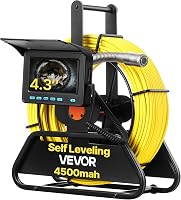
The VEVOR 98 ft model is a good example of this tier. It has a 4.3-inch color screen, a 98 ft fiberglass cable with distance markings, six adjustable LEDs and a 4500mAh battery rated for up to 5 hours.
It saves video and photos to a 16GB SD card and has an IP68 waterproof camera head. The cable diameter is 0.2 inch, and the camera suits straight pipes from 1.18 to 3.93 inches.
It also fits right-angle pipes from 1.97 to 3.93 inches and can pass through two consecutive bends.
The kit covers the small parts you need to start, from the monitor and camera probe to a USB Type-C cable, lens cap, guide wheel and bracket. That is a complete first camera rather than a bare probe you have to finish yourself.
The screen resolution is 480 x 272 and the camera resolution is 480P. The LEDs have three brightness levels.
For a quick look at a home lateral, that is enough to see blockages and rough pipe condition.
What do you pay more for: screen size or cable length?
Both matter, but screen size changes the daily experience more than cable length for most homes. A bigger screen helps you spot cracks and clogs without squinting, while extra cable only matters on long runs.
The ChoosePRO 7-Inch model pairs a 7-inch IPS screen with a 100 ft marked cable. The screen runs 1080P with 16x zoom, and the camera records to a 32GB card with instant playback.
Its 5000mAh battery runs over 8 hours on a charge. A 1-second twist-lock reel makes cable handling quicker, and the camera head is IP68 rated with six adjustable LEDs.
The zoom is the feature that separates this tier from the basic one. A 16x digital zoom lets you close in on cracks, clogs and rust without moving the camera.
The 32GB card also holds more video than the smaller cards some sewer cameras ship with.
The monitor mount is another upgrade. The ChoosePRO uses an aluminum crab claw clamp and a peanut clamp instead of plastic, for tool-free setup and a steadier viewing angle.
The mount fits any 1/4 inch thread and turns through 360 degrees.
A longer cable adds reach but also weight. The 100 ft cable on the ChoosePRO covers most home laterals without the bulk of a 165 ft reel.
When is a locator worth the extra cost?
A locator is worth the extra cost when you must know exactly where a pipe runs or how deep it sits, such as before a repair dig. For a plain look inside a drain, skip it.
The VEVOR 165 ft model bundles a 512 Hz transmitter in the camera head with a matching receiver. The 9-inch 720p screen adds DVR recording, and the cable reaches 165 ft with length markings.
Its camera has a 1-megapixel sensor and a 130 degree view angle, and the IP68 head uses a stainless steel housing and a sapphire lens. Twelve adjustable LEDs light the pipe.
The cable fits straight pipes from 0.98 to 5.91 inches and right-angle pipes from 1.97 to 5.91 inches, and it can pass through two consecutive bends.
The locator receiver reads the signal from the camera head and shows position information on its own screen. A camera head with a 512 Hz transmitter but no receiver cannot be tracked, so the kit is the only version here that locates out of the box.
Locators also add weight and setup time. You pair the receiver, sweep for the signal and mark the spot.
The whole kit weighs 21.7 pounds, well above the 7.5 pounds of the basic VEVOR model, so carrying it to a distant cleanout is more work.
How does self-leveling change the price?
Self-leveling keeps the picture upright as the camera rolls in the pipe, and it adds electronics and cost. Many home cameras do not have it, including the VEVOR models here.
That matters more for professional work than for a quick home check. The electronics sit in the camera head and add weight and complexity, which is why self-leveling cameras sit at the top of the price range.
Compare models in our guide to the best self leveling sewer camera if an upright picture is a must. The extra cost is real, so decide whether the feature earns its place.
For a one-off look down a straight lateral, a fixed-focus camera with a 120 degree view angle like the VEVOR 98 ft model shows you what you need without the self-leveling parts.
Is a sewer camera cheaper to buy or rent?
Renting or hiring a plumber is cheaper for a one-time look; buying wins when you inspect more than once or twice a year. The crossover depends on how many drains and properties you own.
If you maintain rental units, a septic system or several homes, a camera pays for itself over repeated calls. For a single blocked drain, a plumber's visit is the lower-cost route.
A camera you own also lets you recheck the same pipe after a fix without paying another call-out.
Our roundup of the best sewer camera picks for home use covers models at each tier. Read it before you decide to buy rather than rent.
Do you need a locator kit or just a camera?
Choose a locator kit only if you need to mark a pipe's position or depth. Otherwise a camera alone covers inspection, and you save on the receiver and its setup.
The VEVOR 98 ft and ChoosePRO models include no locator. The 165 ft VEVOR includes both the transmitter and the receiver in one kit.
That split is the main price jump between tiers. The basic model weighs 7.5 pounds against 21.7 pounds for the locator kit, which tells you how much extra hardware comes with locating.
If a locator is the deciding feature, compare kits in our guide to the sewer camera with locator. For most home drains, the camera alone is enough.
Wondering how the two VEVOR tiers stack up? Our Anysun vs VEVOR sewer camera comparison covers the trade-offs.
Which sewer camera fits your budget?
Pick the camera by the job, not by the highest price. A short home lateral needs reach and a clear screen.
A buried pipe repair needs a locator. Long runs need more cable.
For most homes, the VEVOR 98 ft model covers the basics at the lowest tier. It records to a 16GB card, runs up to 5 hours and fits pipes from 1.18 to 3.93 inches.
The ChoosePRO 7-Inch adds a bigger 1080P screen, 16x zoom, a 32GB card and over 8 hours of battery life. The VEVOR 165 ft kit is the choice when locating is the goal, with its 512 Hz transmitter and receiver and a 9-inch screen.
Check the cable length against your longest run before you buy. A 98 ft cable suits most home laterals, while 130 to 165 ft helps with runs to the street.
Also check pipe size: the basic model stops at 3.93 inches, while the locator kit reaches 5.91 inches.
So how much is a sewer camera? Match the features to your drains and buy only what the job needs.
Pick the 98 ft model for a simple home check, the 7-Inch for clearer viewing, or the 165 ft kit when position matters.
Frequently asked questions
How much is a sewer camera for home use?
Home sewer cameras run from budget to premium depending on screen size, cable length, locator and self-leveling features. A 98 ft model with a 4.3-inch screen sits at the lower end, while a 165 ft camera with a locator sits at the higher end.
What makes a sewer camera cost more?
The four biggest cost drivers are screen size, cable length, a built-in 512 Hz locator and self-leveling. Bigger screens and longer cables add material and weight, and locator or self-leveling electronics push the price up further.
Do I need a locator on a home sewer camera?
You need a locator only when you must pinpoint a buried pipe's position or depth, such as before digging a repair. For a simple look inside a drain, a camera without a locator covers most home checks.
Is a 98 ft cable long enough for a home sewer line?
A 98 ft cable reaches most home lateral lines from a cleanout to the main, which is often under 100 ft. Longer runs to the street or a distant yard cleanout may need a 130 to 165 ft cable.
Does a sewer camera price include the locator receiver?
Only models sold as a locator kit include the receiver. A camera head with a 512 Hz transmitter still needs a separate receiver to track position, so buy a kit when locating is the goal.