Self-Leveling vs Standard Sewer Camera: Which Is Better? (October 2026)
Choose a self-leveling sewer camera if upright images matter; choose a standard model if you can work with a rotated view. The right fit also depends on pipe diameter, cable length and the inspection features you need.
On this page (7 sections)
Choose a self-leveling sewer camera if upright images matter; choose a standard model if you can work with a rotated view. In a self leveling sewer camera vs regular comparison, image orientation is the main difference, but pipe fit and inspection needs matter too.
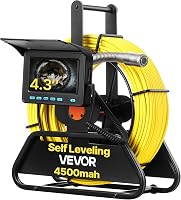
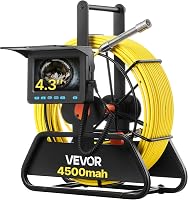
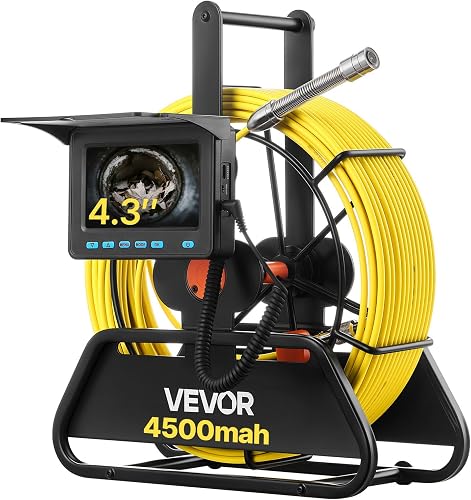
Both VEVOR cameras have 98 ft cables, a 4.3 in screen, recording and photo capture, and a 4500mAh battery. The self-leveling model has 12 adjustable LEDs, while the standard model has 6.
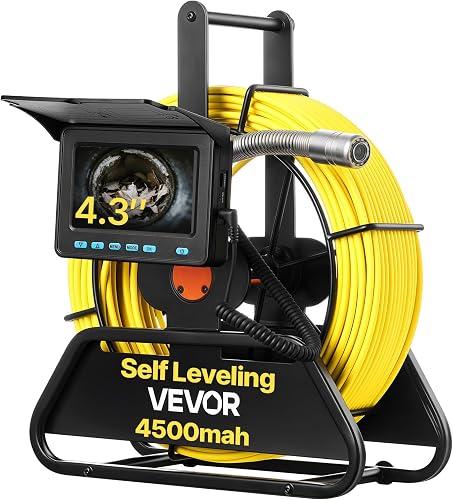
Self-leveling sewer camera vs regular: what changes?
A self-leveling camera keeps the image upright as its probe rotates; a standard camera does not. That can make it easier to read which part of the pipe is the floor or wall while you guide the head.
A standard camera's view can rotate with the probe. You can still inspect the image, but you may need to pause and reorient yourself when the head turns in a bend.
Self-leveling doesn't mean the camera steers itself or finds damage. It affects image orientation, while you remain responsible for moving the cable and interpreting what appears on screen.
For a broader overview of features and buying choices, see our sewer camera buying guide. If you're comparing the self-leveling type with other options, our best self-leveling sewer cameras guide covers that category.
Which VEVOR camera fits your inspection?
Pick the standard model for a rotating view, or the self-leveling model if upright framing suits your inspection. Their shared cable length and screen size make pipe compatibility and lighting useful points to compare.
The VEVOR 98 ft Sewer Camera suits buyers who don't need the image to self-level. It has 6 adjustable LEDs with 3 brightness levels, a 480P camera, and a 4500mAh battery.
The VEVOR 98 ft Self-Leveling Sewer Camera suits inspections where the head may rotate and you want the picture to stay upright. It has 12 adjustable LEDs with 3 brightness levels and a 1280 x 720 camera.
Both models include a 16GB card for recording and photo capture. Neither has a built-in 512 Hz transmitter or includes a locator receiver, so don't choose either if locating the camera head from above ground is a requirement.
How do the cable and pipe ranges compare?
Both cameras have 98 ft cables, but their stated pipe ranges differ. Check the pipe's inside diameter and bends before deciding that either camera will fit.
The self-leveling model is specified for pipes from 50 to 150 mm, including straight or right-angle pipes. For a single 90-degree elbow, its stated range is 50 to 150 mm, and it can pass through 2 consecutive bends.
The standard model is specified for straight pipes from 30 to 100 mm and right-angle pipes from 50 to 100 mm. For a single 90-degree bend, its stated range is 50 to 100 mm, and it can pass through 2 consecutive bends.
Those figures make the standard model a possible fit for some smaller straight pipes, while the self-leveling model covers larger diameters. Measure the pipe where the camera must pass, and account for elbows rather than relying only on the pipe's nominal size.
Both use a 0.2 in fiberglass semi-rigid cable with distance markings. A semi-rigid cable still takes some effort to guide through bends, so feed it steadily and avoid forcing it when resistance increases.
If reach is a concern, use our guide to choosing a sewer camera cable length to think through how much cable your line may require. The 98 ft cable length alone doesn't tell you how far the camera will travel through a particular drain.
Does self-leveling mean a clearer picture?
No, self-leveling controls orientation rather than image detail. Compare resolution, screen resolution and lighting separately when a clear view is your priority.
The self-leveling model has a 1280 x 720 camera resolution and an 800 x 480 screen resolution. The standard model has a 480P camera and a 480 x 272 screen.
The self-leveling model also has 12 white LEDs, while the standard model has 6. Both offer 3 brightness levels, and each has a 120-degree viewing angle.
More lights don't guarantee a useful view in every pipe. Water, debris, distance from the pipe wall and the condition of the lens can all affect what you can see.
When is a standard sewer camera enough?
A standard camera can be enough when you can interpret a rotating image and its pipe range suits your line. It keeps the inspection focused on the camera view without adding an image-orientation feature.
A rotating view may be manageable in a straight run or when you can pause to understand the head's position. It can take more attention when the probe turns through bends or rolls against a pipe wall.
The VEVOR standard model has the same 98 ft cable length as the self-leveling option. Its 6 LEDs and 480P camera resolution are different, so compare those details if the image is central to your inspection.
Learn the basics of feed and retrieval in our guide on how to use a sewer camera on your drain line. Slow cable movement can help you keep track of what the screen shows.
What does neither camera do?
Neither model locates the camera head from above ground. Each lacks a built-in 512 Hz transmitter and a locator receiver.
A camera image can reveal a visible obstruction or pipe feature, but it doesn't give you a surface location by itself. If you need to mark a point for digging or repair, check that the camera and locator equipment are designed to work together.
Self-leveling also doesn't identify roots, cracks or blockages for you. It keeps the picture upright, while diagnosis still depends on what is visible and how you interpret it.
Our guide to what a sewer camera locator does explains the separate role of locating equipment. For a camera setup that includes a locator, see sewer cameras with a locator.
Which one should you choose?
Choose the standard VEVOR if its pipe range and rotating view fit your needs; choose the self-leveling model for upright framing and more adjustable LEDs. Confirm pipe diameter and bends before selecting either camera.
The self-leveling model is the closer match when you expect the probe to rotate and want the image to stay upright. The standard model is a reasonable fit when you can work with a rotating image and need its smaller straight-pipe range.
For either camera, compare the line's diameter, bends, required reach and need for a locator before you buy. If upright viewing is your deciding feature, start with our self-leveling sewer camera guide.
Frequently asked questions
What is the difference between a self-leveling and standard sewer camera?
A self-leveling sewer camera keeps the image upright as the probe rotates, while a standard camera's view can turn with the head. Upright framing may make pipe features easier to interpret, but both types still depend on lighting, screen quality, cable control and the pipe itself.
Does self-leveling improve the camera image?
Self-leveling changes image orientation, not the camera's resolution or the condition of the pipe. It can keep the picture upright as the head turns, which may make it easier to follow the pipe floor and walls.
Check resolution, lighting and screen details separately.
Can these VEVOR sewer cameras locate a buried pipe problem?
Neither camera includes a built-in 512 Hz transmitter or a locator receiver. They can show the camera's view inside a pipe, but you need compatible locating equipment to identify the head's position from above ground.
How do I choose between these 98 ft sewer cameras?
Choose the self-leveling model if upright framing is useful to you, and the standard model if you are comfortable interpreting a rotating view. Both have 98 ft cables, but their stated pipe ranges differ, so compare the exact pipe diameter and bends before choosing.